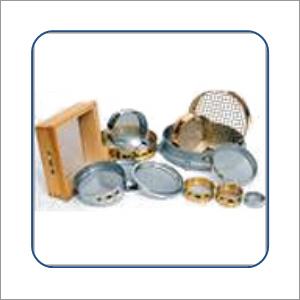
About Test Sieves
Test Sieves - 8" Dia 4" Deep Wash Test Sieves
- 8" Dia 8" Deep Wash Test Sieves
- 8" Dia Stainless Steel Wire/Brass Frame Test Sieves
- 8" Dia Stainless Steel Wire/Stainless Steel Frame Test Sieves
- 8" Dia 8" Deep Stainless Steel Wire/Brass Frame Test Sieves
- 12" Dia Stainless Steel Wire/Brass Frame Test Sieves
- 12" Dia Stainless Steel Wire/Brass Frame Test Sieves
- 2" Dia Stainless Steel Wire/Brass Frame Test Sieves
- 2" Dia Stainless Steel Wire/Brass Frame Test Sieves
- 4" Dia Stainless Steel Wire/Stainless Steel Frame Test Sieves
- 4" Dia Stainless Steel Wire/Brass Frame Test Sieves
- 12", 8", 4" and 2" Brass and S.S. Pans and Covers.
High Precision and VersatilityThese laboratory sieves are designed for industries requiring accurate particle size analysis. Their standardized aperture sizes and rimmed, seamless frames ensure dependable results for both dry and wet sieving applications. Their versatility makes them suitable for use in chemical, pharmaceutical, food, construction, and research laboratories.
Durability and Ease of MaintenanceConstructed from premium stainless steel, these sieves are corrosion resistant and feature a polished finish, making them easy to clean and maintain. The robust design guarantees a long lifespan, even with frequent use in demanding environments.
Compliance and Global StandardsAll sieves conform to IS, ASTM, and ISO standards, assuring users of globally recognized accuracy and performance. Whether for domestic laboratories or export requirements, their compliance ensures reliability in all critical testing processes.
FAQs of Test Sieves:
Q: How are these test sieves used in laboratory settings?
A: These test sieves are used to separate and analyze particles of different sizes by manual shaking or using a sieve shaker. The stackable design allows multiple sieves to be used together for precise grading.
Q: What materials are suitable for sieving with these laboratory test sieves?
A: They are ideal for a wide range of samples, including chemicals, pharmaceuticals, food products, construction materials, as well as for research applications requiring both dry and wet sieving.
Q: When should I select a 200 mm (8 inch) sieve diameter over other sizes?
A: A 200 mm sieve is commonly chosen for standard laboratory analysis due to its balance of capacity, convenience, and compatibility with most sieve shakers, but other diameters are available for larger or smaller sample volumes.
Q: Where can these test sieves be applied?
A: These sieves find applications in chemical labs, pharmaceutical manufacturing, food processing, construction material assessment, research institutions, and quality control labs worldwide.
Q: What is the process for cleaning and maintaining these test sieves?
A: After use, clean the sieves with a soft brush and mild detergent, rinse thoroughly, and allow them to air dry. The polished finish and stainless steel construction simplify maintenance and help prevent contamination.
Q: What are the benefits of the woven wire mesh technology and polished surface?
A: Woven wire mesh provides precise, consistent aperture sizes for accurate sieving, while the polished surface ensures easy cleaning, reduces material retention, and enhances corrosion resistance.




 Send Inquiry
 Send Inquiry

