About HARDNESS TEST BLOCKS
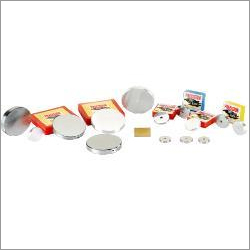
HARDNESS TEST BLOCKS
TECHNICAL SPECIFICATION
| Type | Range | Approx Size |
| 1.1 HRC | 20-30, 35-55, 59-65 | 50 mm dia. |
| 1.2 HRB | 80-100 | 50 mm dia. |
| 1.3 HRB | 40-70 | 50 mm sq. |
| 1.4 HRA | As applicable | 50 mm dia. |
| Brinell Test Blocks | . | . |
| 1.5 HB 2.5/187.5kgf | 200-250, 250-300,
300-350, 350-400 | 50 mm dia. |
| 1.6 HB 5/750 kgf
And
HB 10/3000kgf | 180-200, 200-250,
250-300, 300-350 | 105 mm dia. |
| 350-400, 400-450,
450-500, 500-600 | 105 mm dia. |
| 1.7 VICKERS-HV-5 & above | 100-150, 180-220,
200-300, 300-400, 400-600, 600-800 | 40mm dia. |
| 1.8 Low Load Vickers | HV | . |
| 1.8a HV - 3, HV- 2
HV - 2.5 | 100-150, 200-400,
400-600, 600-800 | . |
| 1.8b HV - 1 | 100-150, 200-400,
400-600, 600-800 | . |
| 1.8c HV - 200 gm
HV - 300 gm
HV - 500 gm | 100-150, 200-400,
400-600, 600-800 | . |
| Superficial Scale | . | .. |
| 1.9a 15N, 30N, 45N | 50 mm dia. | . |
| 1.9b 15T, 30T, 45T | 50 mm dia. | . |
| Test Blocks | Hardness Range | Size |
| 1.10 HB 10/1000
1.11 HB 10/500
1.12HB 5/500
1.13 HB 5/250
1.14 HB 2.5/62.5
1.15 HB 5/62.5
1.16 HB 2.5/31.25
1.17 HB 2.5/ 15.625 | 90-120 HB
90-120 HB
90-120 HB
90-120 HB
90-120 HB
90-120 HB
90-120 HB
90-120 HB | 100 mm dia.
100 mm dia.
100 mm dia.
100 mm dia.
50 mm dia.
100 mm dia.
50 mm dia.
50 mm dia. |
Application & UsageHardness test blocks serve as reference standards for calibrating and verifying hardness testing machines, including Rockwell, Brinell, and Vickers types. Their accurate hardness values enable testers to optimize machine performance and adhere to global standards like ISO 6508 and ASTM E18. Use these blocks manually on bench or flat surfaces without requiring a power supply.
Precision & DurabilityMade from high-quality alloy steel, each block is hardened, stabilized, and features a lapped, mirror-like finish for exceptional accuracy and surface integrity. Their robust construction provides high resistance to wear and deformation, ensuring consistent test results and a long usage life, even with regular calibration routines.
Packaging & IdentificationEach hardness test block is supplied in an individual protective case to minimize risk of damage. Markings include an engraved unique serial number and the certified hardness value, allowing easy traceability and compliance for laboratory or industrial audits.
FAQs of HARDNESS TEST BLOCKS:
Q: How do I use a hardness test block for calibration purposes?
A: To calibrate your hardness testing machine, place the test block on a flat, stable surface and follow the manufacturers manual method to measure its hardness. Compare the instruments reading with the blocks engraved hardness value to verify accuracy.
Q: What materials are hardness test blocks made of, and how does their finish affect performance?
A: Hardness test blocks are manufactured using special alloy steel, which is hardened and stabilized. Their surface is ground and lapped to a mirror finish, enhancing accuracy by providing a consistent and defect-free area for testing.
Q: When should hardness test blocks be used for verification?
A: Hardness test blocks should be used regularly for calibration and verificationespecially before critical measurements, periodic maintenance, or after relocating or servicing your hardness testerto ensure consistent and reliable machine operation.
Q: Where should I store hardness test blocks for optimal longevity?
A: Store hardness test blocks in their protective cases in a controlled environment with a relative humidity below 80% and temperatures between 10C and 40C. This helps maintain their precision and prevents corrosion or deformation.
Q: What are the typical sizes and shapes available for hardness test blocks?
A: Standard sizes include a diameter of 55 mm and a height of 10 mm, though custom sizes are available upon request. Shapes can be round or square, specified according to testing requirements.
Q: Why are the blocks serial numbered and engraved with hardness values?
A: Serial numbers and engraved hardness values provide traceability and certification, helping maintain records for audits and ensuring conformity with international standards during machine calibration or verification processes.
Q: What benefits do certified hardness test blocks offer in quality assurance?
A: Certified hardness test blocks ensure your tester operates within required accuracy limits, significantly enhancing confidence in measurement reliability and supporting compliance with industry regulations and quality protocols.




 Send Inquiry
 Send Inquiry

