About Proctor Compaction Apparatus
Fabricated as per IS: 10074, a
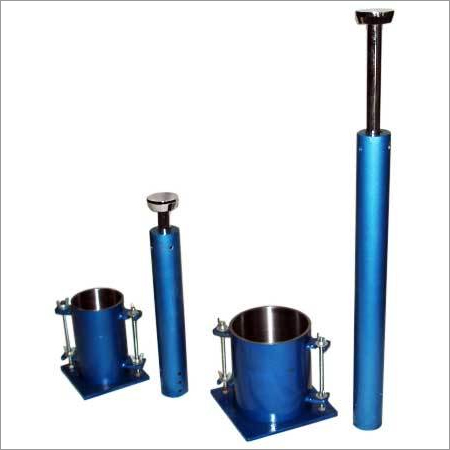
Proctor Compaction Apparatus is used to check the density of compacted soil. Soil compaction is essential for constructing earth fill for dams, reservoirs, runways, canal embankments, highways and railways. The relationship between soil moisture content and compacted dry density largely determine the construction conditions.
The Proctor Compaction Apparatus Is Of Two Types : - 100 mm dia. X 1000 cc volume mild steel mould with a base plate & collar and 2.6 kg x 310 mm controlled fall steel rammer.
- 150 mm dia. X 2250 cc volume mild steel mould with base plate & collar and 4.89 kg x 450 mm controlled fall steel rammer.
Reliable Design for Accurate Soil TestingEngineered for maximum accuracy, the Proctor Compaction Apparatus meets strict standards such as IS:2720 and ASTM D698. Its durable construction using mild steel and chrome plating ensures outstanding performance in both standard and modified Proctor tests. This makes it an indispensable tool for laboratories and construction sites alike.
Versatile, Manual, and Mechanical OperationThe apparatus accommodates both manual and mechanical operation, offering flexibility and control for various soil testing settings. Its user-friendly lever-operated drop mechanism and easy assembly simplify the testing process, ensuring consistent, repeatable results across multiple applications.
Safe, Convenient, and Durable PackagingSupplied in a robust wooden box, the Proctor Compaction Apparatus remains protected during transit. All critical componentsincluding mould, rammer, collar, base plate, and spacer discare securely packed, ensuring that the apparatus reaches you in prime condition, ready for immediate deployment.
FAQs of Proctor Compaction Apparatus:
Q: How do you operate the Proctor Compaction Apparatus for soil testing?
A: Begin by assembling the mould, base plate, and collar. Fill the mould with soil in layers, compacting each layer using the appropriate rammer and drop height (2.6 kg/310 mm for standard, 4.89 kg/450 mm for modified). The lever-operated drop mechanism ensures consistent energy application. Disassemble the apparatus after compaction to extract the sample for analysis.
Q: What types of soil tests can this apparatus perform?
A: The Proctor Compaction Apparatus is suitable for both Standard Proctor (IS:2720) and Modified Proctor (ASTM D698/D1557) compaction tests. These tests determine the maximum dry density and optimum moisture content of soils used in construction and civil engineering projects.
Q: When should the Proctor Compaction Apparatus be used?
A: Use this apparatus during site investigation, soil characterization, and quality control stages in construction to ensure that soil used for embankments, foundations, or pavements achieves proper compaction. It is essential whenever understanding soil compaction behavior is required.
Q: Where is this apparatus typically used?
A: Commonly utilized in soil testing laboratories, construction quality control departments, geotechnical engineering firms, and civil engineering projects, the Proctor Compaction Apparatus is adaptable for both field and laboratory environments.
Q: What is the process for setting up and maintaining the apparatus?
A: Assemble the unit by connecting the mould, detachable collar, and base plate. Ensure all parts are clean, corrosion-free, and move smoothly. After use, disassemble and clean each component thoroughly, checking for wear or damage. Store in the supplied box for protection.
Q: Why is this apparatus made with chrome-plated and powder-coated mild steel?
A: Chrome plating and powder coating provide a smooth, corrosion-resistant finish, enhancing durability and longevity, especially in harsh laboratory or construction environments. These treatments also contribute to consistent, accurate results over extended use.




 Send Inquiry
 Send Inquiry

