About Automatic Compactor
The
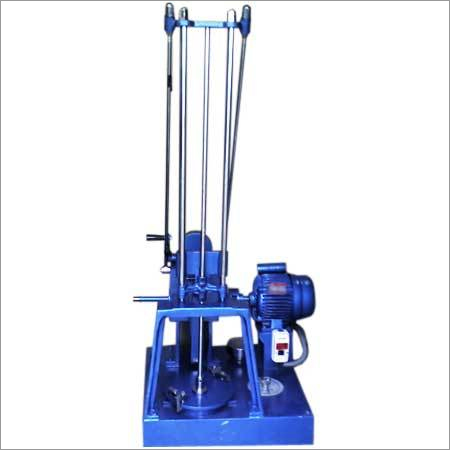
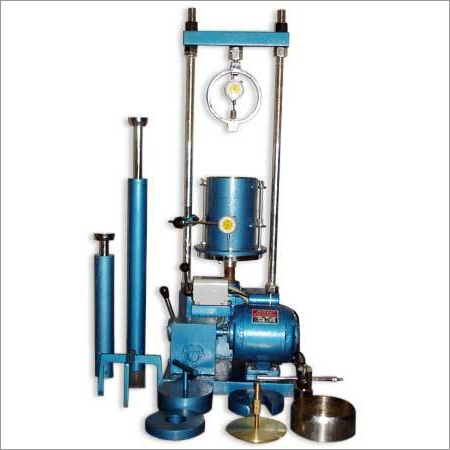
Automatic Universal Compactor has been fabricated as per IS: 2720 (Part VII & VIII). The machine is fabricated to compact specimens uniformly as well as automatically for Proctor and C.B.R. tests thereby completely abolishing the laborious hand compaction method. We are the leading manufacturer and supplier of Automatic Universal Compactor machines.
Components and Functionality : The lateral movement of the table and the rotation of the mold after every stroke (for C.B.R. mould only) ascertain complete coverage of soil surface. Herein, the height of the compaction rammer can be rapidly swapped from 310 to 450mm by hand lever. It consists of hammer in two parts that is adjustable for 4.89 kg for heavy compaction and 2.6 kg for light compaction is supplied as a standard component of the unit. A graduated dial incorporating a micro switch supports the presetting of number of blows before each test and then automatically stops the machine on completio
Cutting-Edge Technology for Efficient Soil CompactionEmploying automatic digital control, this compactor streamlines the soil testing process in laboratories. Its advanced microprocessor ensures precise, programmable cycles with low noise operation under 60 dB. The digital LCD display allows users to monitor every stage, ensuring consistent results for civil engineering applications.
Safety and Reliability at Its CoreKey safety features such as emergency stop button and overload protection make operation secure. The rust-resistant epoxy and powder-coated finish enhance durability and longevity, while the safety interlock prevents accidental start-ups. These qualities result in both reliability and peace of mind for operators.
User-Friendly Design for Modern LabsInstallation is straightforward with a floor-mounted setup. The adjustable operating pressure (50100 kPa), fully automatic functionality, and programmable cycles allow users to tailor the process to specific test requirements. Compatible with standard sample moulds, rammer, and base plate accessories, it facilitates seamless workflow integration.
FAQs of Automatic Compactor:
Q: How is the Automatic Compactor installed in a laboratory setting?
A: The Automatic Compactor is designed for floor mounting, requiring only a stable, level surface and access to a 220V AC, 50Hz power source. All necessary accessories, such as sample moulds and base plates, can be easily affixed for immediate operation.
Q: What benefits does the programmable cycle feature offer for soil sample testing?
A: Programmable cycles (up to 99) allow precise control over the compaction process, enabling repeatable and consistent soil tests. This not only improves the accuracy and reliability of laboratory results but also saves time during repetitive procedures.
Q: When should the adjustable compaction stroke be used and why is it important?
A: The adjustable compaction stroke (25 mm to 50 mm) is used to accommodate varied soil types and test requirements. Selecting the correct stroke ensures that compaction adheres to the relevant testing standards, maximizing both accuracy and flexibility.
Q: Where can this automatic compactor be best utilized?
A: This compactor is ideally suited for civil engineering laboratories, soil testing facilities, and research institutions. Its design and features make it well-suited for environments requiring high accuracy and automation in soil compaction tests.
Q: What is the operating procedure for compacting a soil sample using this machine?
A: First, place the soil sample in the mould and set the desired stroke and pressure on the digital control panel. The microprocessor manages cycle count and compaction, with instructions viewable on the backlit LCD. Safety features ensure secure operation throughout the process.
Q: How does the safety interlock system enhance operational safety?
A: The safety interlock system prevents machine operation if critical components are not correctly positioned, and the emergency stop button provides immediate shutdown capability. Overload protection further safeguards both user and equipment during compaction cycles.




 Send Inquiry
 Send Inquiry

