About COPPER STRIP CORROSION STANDARD
COMPLIANCE
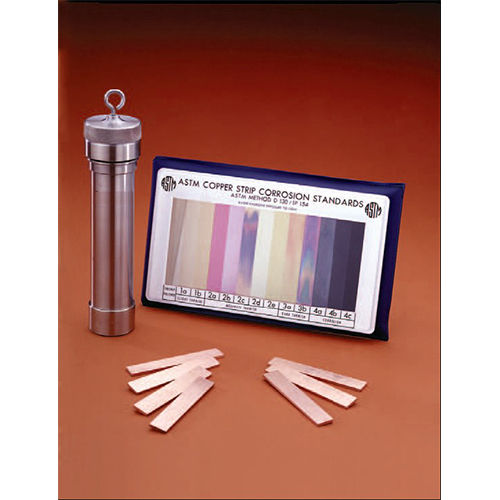
Conforms to FTM 791-5325; NF M 07-015;ASTM D130; IP 154; FSPT DT-28-65; ISO 2160; DIN 51759
APPLICATION
To assesses the degree of corrosivity of petroleum products like fuels, solvents, lubricating oil and other products.
Reliable Corrosion Reference StandardOur Copper Strip Corrosion Standard offers consistent and precise visual comparison for evaluating corrosive tendencies in oils and fuels, vital for pharmaceutical and laboratory applications. Crafted from premium copper and meticulously polished, each strip complies with major international standards, ensuring reliability for manufacturers, exporters, and suppliers across India.
Comprehensive Test CompatibilityDesigned to meet ASTM D130, IP 154, and IS 1448 methods, these corrosion standards facilitate seamless integration into diverse laboratory workflows. Their standardized color scale enables clear, reproducible results, simplifying the visual inspection process while ensuring accurate quality control in pharmaceutical industries.
Convenient Packaging and LongevityEach copper strip is supplied in a protective individual case, safeguarding the surface finish from oxidation and contaminants. With recommended storage in a dry, clean setting, their acclaimed longevity and shelf life make them a practical investment for recurring laboratory and industrial usage.
FAQs of COPPER STRIP CORROSION STANDARD:
Q: How is the copper strip corrosion standard used in the pharmaceutical industry?
A: The copper strip corrosion standard is utilized to test chemical samples, particularly oils and fuels, for potential corrosive effects. The strip is exposed to the sample under controlled conditions to visually assess any color changes according to the standardized scale, helping ensure the safety and quality of products in pharmaceutical applications.
Q: What test methods are compatible with this copper corrosion standard?
A: This product is compatible with ASTM D130, IP 154, and IS 1448 test methods, providing universal applicability for corrosion testing in laboratory and industrial settings.
Q: When should the copper strip corrosion standard be replaced?
A: As long as the strip is stored correctlydry and clean, within its protective caseit maintains a long shelf life. However, it should be replaced if any surface contamination, tarnish, or damage is observed, which can compromise testing accuracy.
Q: Where should the copper strip corrosion standard be stored?
A: For optimal shelf life and integrity, these strips should be stored in a dry, clean environment, ideally inside the individual protective case provided to prevent contamination and oxidation.
Q: What process is involved in using the copper strip for corrosion testing?
A: During testing, a standard-size copper strip is manually placed in contact with the test sample under specific ambient conditions. After the required exposure period, its appearance is visually compared to the color scale (1 to 4) as per ASTM D130 to determine the level of corrosion.
Q: What are the benefits of using a standardized copper strip corrosion standard?
A: Using this reference standard ensures accurate, reproducible, and internationally recognized measurement of corrosiveness, aiding consistent quality control and regulatory compliance in pharmaceutical and laboratory environments.




 Send Inquiry
 Send Inquiry

