About Cement Autoclave
Cement Autoclave
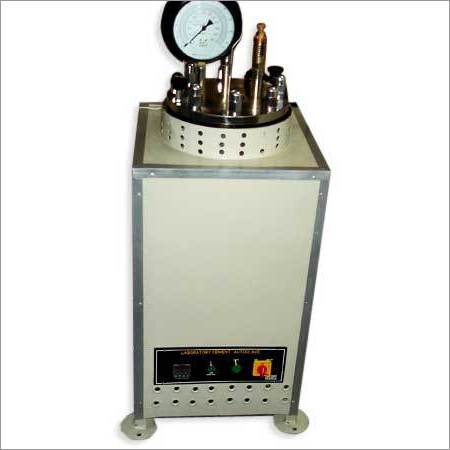
We are one of the distinguished manufacturers, exporters and suppliers of unmatched range of Cement Autoclave. Designed at our sophisticated machining facility in accordance with IS: 4031 (Part III), these autoclaves are suitable for conducting accelerated soundness tests on cements and also autoclave expansion test, requiring a constant steam pressure by the corresponding constant temperature. Our Cement Autoclave acknowledged by our clients owing to its low maintenance, accurate functionality and study construction. We adhere to the parameters of the national and international quality standards to provide the clients with utmost satisfaction in terms of quality.
Components:
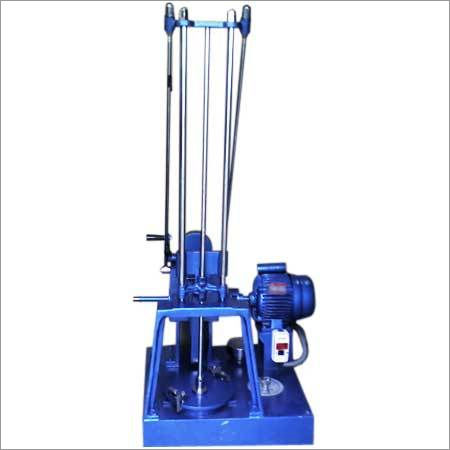
It consists of a stainless steel cylinder with an insulated cover, mounted on a sturdy supporting frame, enclosed in a heat insulated metal housing. The attached control unit encloses a sensitive pressure regulator and pressure gauge, power switches and pilot lamps for controlling the electrical heating units.
Advanced Cement Testing AutoclaveEngineered for reliability and precision, this laboratory autoclave is suited for testing cement under controlled high temperature and pressure. Its robust stainless steel construction, advanced insulation technology, and digital controls give you accurate and repeatable performance, making it essential for modern cement laboratories seeking consistent results.
Digital Control & Safety FeaturesThe autoclave comes equipped with a digital temperature and pressure display, ensuring accurate monitoring throughout test cycles. State-of-the-art safety features include durable screw clamps, a secure gasket sealing system, and essential accessories like safety valve and thermocouple. These components work together to maintain safety while optimizing operational efficiency.
FAQs of Cement Autoclave:
Q: How is the cement autoclave chamber capacity adjusted for different testing requirements?
A: The autoclave offers a standard 8-liter chamber capacity, with customizable options available to accommodate various sample sizes and testing needs. Manufacturers can provide tailored chamber volumes upon request to meet specific laboratory requirements.
Q: What is the benefit of using double wall insulation with mineral wool in this autoclave?
A: Double wall insulation with mineral wool minimizes heat loss and maximizes energy efficiency, ensuring stable high temperatures during cement testing. This design also enhances safety by keeping the exterior cool to the touch and providing additional protection against thermal hazards.
Q: When should this cement autoclave be used in the cement testing process?
A: The autoclave is used during procedures that require exposure of cement samples to high pressure and temperature conditions. It is typically employed for tests such as soundness or durability assessments after initial setting and mixing.
Q: Where is this autoclave most commonly utilized?
A: This autoclave is primarily used in cement testing laboratories within research institutions, manufacturing plants, and quality control departments, especially those focused on construction materials and cement production.
Q: What is the process for testing cement samples using this autoclave?
A: Cement samples are placed in the included stainless steel rack inside the autoclave chamber. The lid is securely sealed with heavy-duty screw clamps and gasket. Using digital controls, set the desired temperature (up to 215C) and pressure (up to 21 kg/cm), and monitor conditions on the display. After the test duration, samples are removed and assessed according to laboratory protocols.
Q: How does the digital control system contribute to precise testing in cement autoclaves?
A: The digital temperature controller and pressure display ensure highly accurate monitoring and regulation, enabling precise control within 0.5C. This technology reduces human error and improves consistency and reliability in testing outcomes.
Q: What advantages do the heavy-duty screw clamps and gasket lid sealing provide for laboratory operations?
A: These features guarantee a secure, leak-proof seal under high-pressure operations, enhancing user safety and maintaining test integrity by preventing steam or pressure escape during operation.




 Send Inquiry
 Send Inquiry

