About Laboratory Ball Mill
Product Description
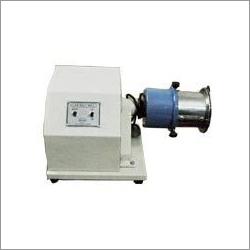
Laboratory Ball Mill offered by us, is designed for mixing and grinding purposes in industries such as cement industries, paints, etc. Our range of Laboratory Ball Mill is appreciated for its high performance and longer working life among the clients. We offer Laboratory Ball Mill in different specification to cater the needs of the customers.
Specifications- Having capacity up to 1 kg fitted with FHP geared motor with maximum speed of 80 RPM
- Jar is made of aluminum having steel balls of different sizes
- Jar is inter-Chargeable and easily removed to operated on 220 V
Widely Used For- Grinding
- Milling
- Pulverizing
Versatile Grinding for Laboratory ApplicationsThis laboratory ball mill is specifically designed for efficient pulverization of samples in diverse sectors, such as pharmaceuticals, minerals, paints, and chemicals. Its adaptability to both steel and ceramic grinding media ensures compatibility with a variety of sample types. Users benefit from its high grinding accuracy, simple manual operation, and broad measurement range, from coarse to ultra-fine powders up to 300 mesh.
User-Friendly and Safe OperationEngineered for ease of use, the ball mill features intuitive manual controls, easy jar installation and removal, and effective safety mechanisms including a robust safety cover and overload protection. The moderate noise level (<70 dB) makes it suitable for laboratories requiring a quiet working environment. Its durable build and reliability further enhance lab workflows.
FAQs of Laboratory Ball Mill :
Q: How do I select the appropriate jar material and grinding media for my sample?
A: The choice between stainless steel and porcelain jars depends on your samples chemical compatibility and hardness. Use steel balls for hard, metallic samples and ceramic balls for softer, non-metallic samples to ensure optimal grinding without contamination.
Q: What are the main steps involved in operating the laboratory ball mill?
A: Begin by placing your sample and selected grinding media into the jar. Secure the safety cover and set your desired rotation speed up to 80 rpm using the control panel. Power the device via its electric source (50 Hz), monitor the process, and remove the processed sample upon completion.
Q: When should the overload protection feature be used?
A: Overload protection automatically activates if the motor or jar encounters excessive load, preventing equipment damage. This feature engages when grinding particularly dense or larger sample masses, ensuring safe operation and preventing breakdowns.
Q: Where is this laboratory ball mill most effectively used?
A: The ball mill is ideal for laboratory environments in research institutes, universities, quality control labs, and industrial facilities specializing in paints, minerals, chemicals, ores, pigments, and pharmaceuticals, where precision sample preparation is critical.
Q: What advantages does this laboratory ball mill offer over conventional grinders?
A: It provides highly accurate grinding results with measurement range up to 300 mesh, exceptional safety features, low noise, compact portability, and compatibility with multiple grinding media and materials, making it preferable for specialized laboratory applications.
Q: How does the temperature range affect processing?
A: The ball mill operates effectively from ambient temperature up to 50C, sufficient for most lab grinding tasks. This ensures sample integrity and allows for safe handling during and after the grinding process.




 Send Inquiry
 Send Inquiry

